
'%3e%3cpath%20fill-rule='evenodd'%20clip-rule='evenodd'%20d='M6.99935%2012.8327C10.221%2012.8327%2012.8327%2010.221%2012.8327%206.99935C12.8327%203.77769%2010.221%201.16602%206.99935%201.16602C3.77769%201.16602%201.16602%203.77769%201.16602%206.99935C1.16602%2010.221%203.77769%2012.8327%206.99935%2012.8327Z'%20stroke='%23666666'%20stroke-linecap='round'%20stroke-linejoin='round'/%3e%3cpath%20d='M1.16602%207H12.8327'%20stroke='%23666666'%20stroke-linecap='round'%20stroke-linejoin='round'/%3e%3cpath%20fill-rule='evenodd'%20clip-rule='evenodd'%20d='M6.99935%2012.8327C8.28802%2012.8327%209.33268%2010.221%209.33268%206.99935C9.33268%203.77769%208.28802%201.16602%206.99935%201.16602C5.71068%201.16602%204.66602%203.77769%204.66602%206.99935C4.66602%2010.221%205.71068%2012.8327%206.99935%2012.8327Z'%20stroke='%23666666'%20stroke-linecap='round'%20stroke-linejoin='round'/%3e%3cpath%20d='M2.875%202.95898C3.93063%204.01461%205.38896%204.66754%206.99978%204.66754C8.61062%204.66754%2010.069%204.01461%2011.1246%202.95898'%20stroke='%23666666'%20stroke-linecap='round'%20stroke-linejoin='round'/%3e%3cpath%20d='M11.1246%2011.0425C10.069%209.98691%208.61062%209.33398%206.99978%209.33398C5.38896%209.33398%203.93063%209.98691%202.875%2011.0425'%20stroke='%23666666'%20stroke-linecap='round'%20stroke-linejoin='round'/%3e%3c/g%3e%3cdefs%3e%3cclipPath%20id='clip0_1267_9109'%3e%3crect%20width='14'%20height='14'%20fill='white'/%3e%3c/clipPath%3e%3c/defs%3e%3c/svg%3e)


is adobe sign cheaper than docusign


Navigating Electronic Signature Costs: A Business Perspective
In the competitive landscape of digital document management, businesses often weigh the costs of electronic signature platforms against their features and scalability. As companies seek efficient ways to streamline contracts and approvals, the question of affordability becomes central. This analysis examines whether Adobe Sign offers a more budget-friendly option compared to DocuSign, drawing from official pricing data and market insights for 2025. We'll break down plans, add-ons, and real-world implications to help inform procurement decisions.

Understanding DocuSign Pricing
DocuSign remains a market leader in electronic signatures, known for its robust enterprise features and global compliance. Its pricing structure is tiered, focusing on user seats, envelope volumes (each envelope represents a document or set of documents for signing), and add-ons. For 2025, DocuSign's eSignature plans are billed annually in the US region, emphasizing scalability for teams.
The entry-level Personal plan starts at $120 per year ($10/month equivalent), limited to one user and five envelopes per month. This suits solo professionals but quickly scales up for teams. The Standard plan, at $300 per user per year ($25/month), supports up to 50 users with around 100 envelopes per user annually, adding team collaboration, templates, and reminders. Business Pro, priced at $480 per user per year ($40/month), builds on this with advanced tools like web forms, conditional logic, bulk sending, and payment collection—still capped at similar envelope limits.
For larger organizations, Enhanced or Enterprise plans require custom quotes, often exceeding $40 per user monthly, incorporating SSO, advanced auditing, and premium support. API access, crucial for integrations, follows separate tiers: Starter at $600/year for 40 envelopes/month, up to Advanced at $5,760/year. Add-ons like SMS delivery or identity verification incur metered fees, potentially adding 20-50% to costs based on usage. In APAC regions, factors like data residency and compliance can inflate prices further due to latency and governance needs.

Exploring Adobe Sign Pricing
Adobe Sign, integrated within Adobe's ecosystem, appeals to businesses already using Acrobat or Creative Cloud tools. Its pricing is similarly subscription-based, with a focus on seamless PDF workflows and enterprise security. For 2025, plans are annual in the US, starting with individual options and scaling to team and enterprise levels.
The basic Individual plan is $9.99 per month (around $120/year), offering unlimited signatures but limited to personal use with basic templates and mobile access. For teams, the Standard plan costs $24.99 per user per month ($299.88/year), including shared templates, workflow automation, and up to 100 agreements per user annually—similar to DocuSign's envelope caps. The Business plan jumps to $39.99 per user per month ($479.88/year), adding advanced routing, forms, and integrations like Salesforce or Microsoft Dynamics.
Enterprise pricing is custom, often starting above $40 per user monthly, with features like delegated signing, API access, and compliance reporting. Adobe's strength lies in bundled discounts for Adobe suite users, potentially reducing effective costs by 10-20%. However, add-ons for SMS authentication or advanced ID verification are usage-based, mirroring DocuSign's model and adding variable expenses. In global markets, Adobe Sign benefits from Adobe's cloud infrastructure but may face similar APAC challenges with localization.

Direct Price Comparison: Is Adobe Sign Cheaper Than DocuSign?
To address the core query—Is Adobe Sign cheaper than DocuSign?—a side-by-side evaluation reveals nuanced differences rather than a clear winner. Both platforms operate on per-user, per-month models with annual commitments yielding the best rates, but costs hinge on team size, usage volume, and integrations.
At the individual level, Adobe Sign edges out slightly at $9.99/month versus DocuSign's $10/month, both capping at low volumes (five envelopes/agreements monthly). For small teams (up to five users), Adobe's Standard plan totals around $1,250/year compared to DocuSign's $1,500, a 17% savings, primarily due to marginally lower base rates and included PDF tools. However, as teams grow to 10-50 users, the gap narrows: Adobe Business at $39.99/user/month versus DocuSign Business Pro at $40/user/month, making annual costs nearly identical at $4,800 for 10 users.
Envelope limits are comparable—both hover at 100 per user/year on mid-tier plans— but overages can add $0.50-$2 per extra envelope, pushing budgets unpredictably. API pricing tilts toward Adobe for light developers: its Developer plan starts at $1,000/year for basic access, cheaper than DocuSign's $600 Starter but with fewer advanced hooks like bulk API sends. Add-ons amplify differences; Adobe's SMS fees average $0.10-0.20 per message, similar to DocuSign, but identity verification can cost 15-30% more on Adobe for biometric checks due to third-party integrations.
In enterprise scenarios, custom quotes obscure direct comparisons, but market reports indicate Adobe often undercuts DocuSign by 5-15% for bundled Adobe ecosystem users, especially in North America. Conversely, DocuSign's standalone strength shines in high-volume, compliance-heavy industries like finance, where its native features justify premiums. For APAC businesses, both face surcharges—Adobe for data localization, DocuSign for governance—potentially increasing costs 20-40% over US rates.
Overall, Adobe Sign is marginally cheaper for small-to-medium teams without deep integrations, saving 10-20% on base subscriptions. Yet, for API-heavy or enterprise use, DocuSign's efficiencies can make it more cost-effective long-term. Businesses should calculate total ownership costs, including training and support, as Adobe's learning curve might offset initial savings.
Other Competitors and Alternatives
Beyond DocuSign and Adobe Sign, the e-signature market includes viable alternatives tailored to specific needs. Platforms like HelloSign (now Dropbox Sign) offer simplicity at $15/user/month for teams, while PandaDoc focuses on proposals with pricing from $19/user/month. These provide competitive edges in usability but lag in global compliance compared to the leaders.
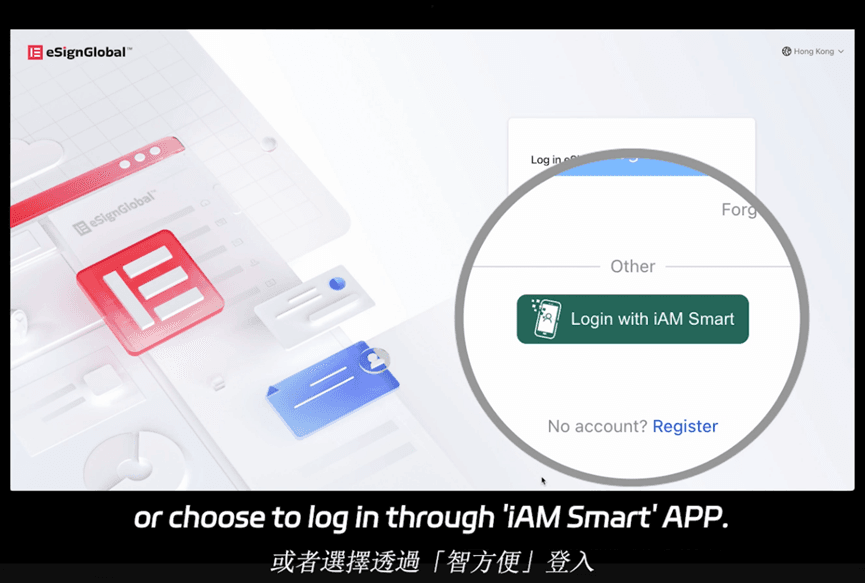
eSignGlobal emerges as a strong contender, particularly for international operations. It supports compliance in over 100 mainstream countries and regions worldwide, with notable advantages in the Asia-Pacific (APAC) area. Optimized for regional speed and regulations, it addresses cross-border challenges like latency and data residency that inflate costs on US-centric platforms. For instance, its Essential plan is priced at just $16.60 per month, allowing up to 100 documents for electronic signature, unlimited user seats, and verification via access codes—all on a compliant foundation that delivers exceptional value. This setup integrates seamlessly with local systems, such as Hong Kong's iAM Smart and Singapore's Singpass, enhancing efficiency for APAC teams without extra fees. For detailed pricing options, businesses can explore customizable tiers that often undercut competitors by 20-30% in regional markets.
Comparative Overview of Key Players
To aid decision-making, here's a neutral comparison table highlighting pricing, features, and strengths across DocuSign, Adobe Sign, eSignGlobal, and select competitors (based on 2025 US/APAC data; prices annual per user unless noted).
| Platform | Base Price (Mid-Tier, $/user/year) | Envelope/Agreement Limit | Key Strengths | APAC Advantages | Drawbacks |
|---|---|---|---|---|---|
| DocuSign | $300 (Standard) | ~100/year | Enterprise compliance, API depth | Global reach, but higher latency fees | Premium add-ons, envelope caps |
| Adobe Sign | $300 (Standard) | ~100/year | PDF integration, bundles | Solid cloud, but localization costs | Steeper for non-Adobe users |
| eSignGlobal | $200 (Essential equiv.) | 100/month (unlimited seats) | Regional compliance, cost efficiency | Native APAC speed, iAM Smart/Singpass integration | Less brand recognition globally |
| HelloSign (Dropbox) | $180 | Unlimited (fair use) | Simple UI, Dropbox sync | Basic international support | Limited advanced workflows |
| PandaDoc | $228 | Unlimited proposals | Sales-focused automation | Growing APAC presence | Weaker pure e-sign compliance |
This table underscores eSignGlobal's value in compliant, high-volume APAC scenarios, balancing affordability with features, though all platforms suit different scales.
Final Thoughts on Choosing an E-Signature Solution
Selecting between DocuSign and Adobe Sign—or alternatives—depends on your business's size, region, and workflow needs. For global enterprises prioritizing integrations, either leader works, with Adobe offering slight edge in cost for PDF-heavy users. As a neutral recommendation for DocuSign alternatives emphasizing regional compliance, eSignGlobal stands out for APAC-focused teams seeking optimized performance and value. Evaluate trials to match your specific requirements.
FAQs
