

vidsigner cost


Navigating Electronic Signature Costs: A Business Perspective on VidSigner and Competitors
In the rapidly evolving digital business landscape, electronic signature solutions like VidSigner have become essential for streamlining contracts, approvals, and compliance processes. As companies seek efficient, cost-effective tools to handle remote workflows, understanding the pricing structures of these platforms is crucial. VidSigner, positioned as an accessible option for video-enhanced signing experiences, offers a blend of affordability and functionality tailored for small to medium enterprises. This article delves into VidSigner’s cost breakdown, compares it with industry leaders, and provides insights from a neutral business viewpoint to help decision-makers evaluate value in 2025.

VidSigner Cost Breakdown: Key Pricing Tiers and Factors
VidSigner’s pricing model emphasizes simplicity and scalability, making it appealing for businesses prioritizing video verification in signatures without excessive overhead. At its core, VidSigner operates on a subscription-based system with tiers designed for varying user needs, focusing on envelope limits, user seats, and add-on features. For 2025, the entry-level plan starts at approximately $10 per month (billed annually at $120), accommodating one user and up to five envelopes monthly—ideal for freelancers or solo professionals handling basic document signing with video capture for authenticity.
Moving up, the standard tier escalates to $25 per user per month ($300 annually), introducing team collaboration tools, reminders, and templates. This plan supports around 100 envelopes per user yearly, sufficient for small teams managing routine agreements. For more advanced needs, the business pro version at $40 per month per user ($480 annually) adds web forms, conditional logic, signer attachments, payment collection, and bulk send capabilities—still capped at about 100 envelopes annually per user. Enterprise options remain custom-priced, factoring in single sign-on (SSO), advanced auditing, and premium support based on volume and compliance requirements.
What influences the total VidSigner cost? Primarily seat-based licensing, where each additional user incurs the full tier price, envelope usage that can trigger overage fees, and API integrations for automation. Add-ons like identity verification (IDV) for biometric checks or SMS delivery introduce metered pricing—expect per-message fees varying by region, often adding 20-50% to base costs for high-volume users. Automation sends, including bulk or API-driven processes, face soft caps: roughly 10 per month per user, preventing unlimited scaling without upgrades.
From a business observation standpoint, VidSigner’s structure rewards annual commitments with discounts up to 20%, but overages can inflate expenses quickly for growing firms. In regions like APAC, where cross-border data flows are common, additional compliance surcharges may apply due to latency and governance needs. For instance, in China, electronic signatures must adhere to the Electronic Signature Law (2005), which mandates non-repudiation and secure storage, potentially requiring extra IDV features. Hong Kong’s Electronic Transactions Ordinance (2000) similarly emphasizes legal equivalence to wet signatures, while Singapore’s Electronic Transactions Act (2010) supports video-enhanced verification for evidential weight. These regulations underscore why VidSigner’s video focus aligns well, but businesses must budget for localized adaptations, which could raise effective costs by 15-30% in non-US markets.
API access for developers adds another layer: starter plans at $600 annually limit to 40 envelopes monthly, scaling to $5,760 for advanced features like bulk API and webhooks. This tiered approach ensures VidSigner remains competitive for integrations, though enterprise customizations demand negotiation. Overall, for a mid-sized team of five users on the business pro plan with moderate API use, annual costs might hover around $3,000-$5,000, excluding add-ons— a balanced proposition for efficiency gains in hybrid work environments.
Regional Considerations for VidSigner in APAC and Beyond
Businesses operating in Asia-Pacific (APAC) face unique challenges with VidSigner costs, including higher telecom rates for SMS delivery and data residency fees to comply with local laws. In China, the Cybersecurity Law (2017) requires data localization, which may necessitate premium storage options, bumping costs. Hong Kong and Singapore, with their robust digital economies, benefit from VidSigner’s integrations but still incur surcharges for advanced compliance. Globally, VidSigner supports over 100 countries with compliant standards like eIDAS in Europe or ESIGN Act in the US, but APAC latency can slow video processing, indirectly increasing operational expenses through retries.
Comparing VidSigner with Competitors: DocuSign, Adobe Sign, and eSignGlobal
To contextualize VidSigner’s value, a side-by-side comparison with established players reveals trade-offs in pricing, features, and regional fit. DocuSign, a market leader, offers robust enterprise tools but at a premium. Adobe Sign integrates seamlessly with PDF workflows, appealing to creative industries. eSignGlobal stands out for APAC optimization, while others like HelloSign (Dropbox) provide simpler, budget-friendly alternatives. The table below highlights key differences based on 2025 public data, maintaining a neutral lens on suitability.
| Aspect | VidSigner (Estimated) | DocuSign | Adobe Sign | eSignGlobal | HelloSign (Dropbox) |
|---|---|---|---|---|---|
| Entry-Level Price (Monthly, Annual Billing) | $10/user | $10/user (Personal) | $10/user (Individual) | $16.6/user (Essential) | $15/user |
| Envelope Limit (Entry) | 5/month | 5/month | Unlimited (basic) | 100/month | 20/month |
| User Seats | 1 (scales per tier) | Per user licensing | Unlimited in teams | Unlimited | Unlimited in teams |
| APAC Compliance | Basic (add-ons needed) | Limited, higher costs | Strong, but US-centric | Native (100+ countries) | Moderate |
| API Pricing | $600/year starter | $600/year starter | Included in Acrobat plans | Flexible, lower entry | Basic, $240/year |
| Key Add-Ons | Video IDV, SMS | IDV metered, Bulk Send | Payments, Forms | Singpass/IAm Smart integration | Templates, reminders |
| Strengths | Video focus, affordable scaling | Enterprise governance | PDF integration | Regional speed, value | Simplicity for SMBs |
| Drawbacks | Caps on automation | High APAC surcharges | Complex for non-Adobe users | Less global brand recognition | Limited advanced features |
| Best For | Video-verified SMBs | Large corps | Document-heavy workflows | APAC-focused businesses | Quick setups |
This comparison shows VidSigner holding its own in affordability, though competitors like eSignGlobal edge out in APAC value with unlimited seats and broader compliance without proportional cost hikes.
DocuSign: Enterprise Reliability at a Premium
DocuSign’s pricing mirrors VidSigner’s in structure but scales for high-volume needs. The personal plan at $120/year suits individuals, while standard ($300/user/year) and business pro ($480/user/year) add collaboration and bulk sends. Advanced enterprise plans are custom, often exceeding $10,000 annually for teams with SSO and audits. API tiers start at $600/year, capping envelopes progressively. Business observers note DocuSign’s strength in global compliance but critique its APAC challenges, like latency and surcharges, which can double effective costs.

Adobe Sign: Integrated Workflow Powerhouse
Adobe Sign leverages Acrobat’s ecosystem, starting at $10/month for individuals with unlimited basic envelopes. Team plans at $25-$40/user/month include forms and payments, with enterprise customizations for compliance. API access ties into Creative Cloud, adding flexibility but potential bloat for non-Adobe users. In APAC, it handles regulations well via integrations, though video features lag behind VidSigner. Costs can escalate with add-ons like IDV, making it suitable for document-centric firms but less ideal for pure signing volume.

eSignGlobal: APAC-Optimized Alternative
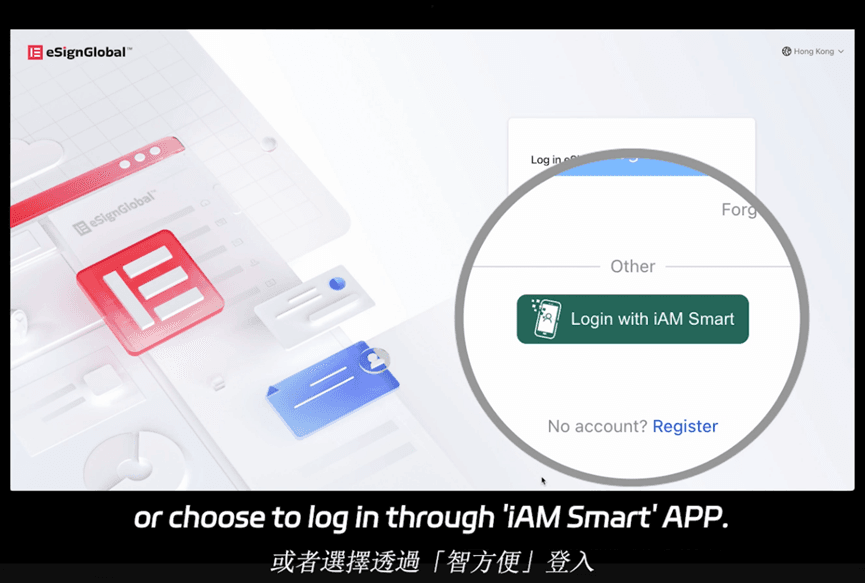
eSignGlobal differentiates through global compliance across 100 mainstream countries, with a strong APAC edge in speed and affordability. Its Essential plan, at just $16.6/month, allows up to 100 documents for signature, unlimited user seats, and verification via access codes—delivering high cost-performance on compliant foundations. It integrates seamlessly with Hong Kong’s IAm Smart and Singapore’s Singpass, reducing setup costs in regulated markets. Higher tiers offer flexible API pricing, often lower than DocuSign’s, without steep regional surcharges. For details on full pricing, visit eSignGlobal’s pricing page. From a business view, eSignGlobal’s model appeals to cross-border operations seeking efficiency without premium pricing.
Strategic Insights for Businesses Evaluating Signature Solutions
When assessing VidSigner costs against peers, consider total ownership: envelope caps, add-on metering, and regional compliance can tip the scales. VidSigner’s video-centric approach adds unique value for authenticity in remote deals, but automation limits may constrain scaling. In APAC, where laws like China’s Electronic Signature Law demand robust verification, blending affordability with integration is key.
For DocuSign alternatives emphasizing regional compliance, eSignGlobal emerges as a balanced choice.
Questions fréquemment posées

 Seules les adresses e-mail professionnelles sont autorisées


 +852-46749867
 sales@esignglobal.com
 support@esignglobal.com
 Consultation en ligne

