

docusign quarterly payment options


Navigating DocuSign’s Billing Models in a Flexible Economy
In the evolving landscape of digital signature solutions, businesses increasingly seek payment options that align with cash flow and operational needs. DocuSign, a leader in electronic signatures, primarily structures its pricing around annual subscriptions for cost efficiency, but offers monthly billing as a flexible alternative. This approach allows users to pay quarterly by opting for three-month cycles under monthly plans, providing a bridge between short-term commitments and long-term savings. From a business perspective, understanding these options is crucial for budgeting, especially for startups or seasonal operations where upfront annual costs might strain resources.

DocuSign’s Core Pricing Structure and Quarterly Flexibility
DocuSign’s eSignature plans are designed for scalability, with pricing tiers catering to individuals, small teams, and enterprises. While annual billing remains the most economical—offering up to 20% discounts compared to monthly equivalents—the platform supports monthly payments that can be aggregated into quarterly outlays. This quarterly payment model is particularly appealing for businesses testing the waters or managing variable workloads, as it avoids locking into a full year while still providing access to essential features.
Personal Plan: Entry-Level Quarterly Access
The Personal plan, priced at $10 per month or $120 annually, is ideal for solo users or freelancers handling occasional documents. Under the monthly billing option, a quarterly commitment equates to $30 (three months at $10 each), totaling $120 over a year—mirroring the annual rate but with the flexibility to pause or adjust after each quarter. This plan includes up to 5 envelopes per month, basic templates, and integrations with tools like Google Drive. For businesses in regions with stringent data privacy laws, such as the EU’s eIDAS regulation or the U.S. ESIGN Act, this tier ensures compliance without overcommitting funds. Quarterly payments here suit consultants or real estate agents who sign sporadically, allowing them to scale usage based on client volume.
Standard Plan: Team Collaboration on a Quarterly Basis
Moving up, the Standard plan costs $25 per month per user ($300 annually), supporting team features like shared templates, comments, and reminders. Quarterly billing under the monthly model comes to $75 per user for three months, enabling small teams (up to 50 users) to collaborate on about 10 envelopes per user monthly or 100 annually. This option is valuable for sales or HR teams needing consistent but not intensive signing. In commercial observations, quarterly flexibility helps mitigate risks in uncertain markets, where annual prepayments might tie up capital needed for growth. Notably, envelope limits apply across billing cycles, so businesses must monitor usage to avoid overages, which are charged at $0.10–$1 per additional envelope depending on volume.
Business Pro Plan: Advanced Features with Quarterly Billing
For more robust needs, the Business Pro plan at $40 per month per user ($480 annually) includes web forms, conditional logic, bulk send, and payment collection. A quarterly payment totals $120 per user, covering up to 100 envelopes annually with automation capabilities. This tier appeals to marketing or legal teams handling bulk operations, where quarterly resets allow reassessment of needs—perhaps after a product launch. From a strategic viewpoint, this model supports agile businesses, but users should note that add-ons like SMS delivery (per-message fees) or identity verification (metered) accrue separately, potentially increasing quarterly costs by 10–20% for high-volume users.
Enterprise and API Plans: Custom Quarterly Arrangements
Enterprise solutions and API plans lack public fixed pricing, but sales teams often negotiate quarterly installments for custom setups, including SSO and advanced audits. For API tiers, the Starter plan ($50/month or $600/year) allows quarterly payments of $150, with 40 envelopes monthly. Intermediate ($300/month) and Advanced ($480/month) follow suit at $900 and $1,440 quarterly, respectively. These are suited for developers integrating signatures into apps, with quotas resetting monthly but billing cycled quarterly for predictability. In APAC regions, where cross-border compliance adds complexity (e.g., China’s Electronic Signature Law requiring local data residency), quarterly options help test integrations without long-term vendor lock-in.
Overall, DocuSign’s quarterly payment via monthly billing occupies a sweet spot for 40–50% of users, per industry reports, balancing affordability with feature access. However, it’s worth noting that switching to quarterly mid-cycle may incur prorated fees, and annual plans often bundle premium support. Businesses should consult DocuSign’s sales for tailored quotes, especially in regulated sectors.
Comparing DocuSign with Key Competitors
While DocuSign dominates the global market, alternatives like Adobe Sign, eSignGlobal, and others offer varied billing flexibilities and regional strengths. A neutral comparison highlights how each addresses quarterly payments, compliance, and value, aiding informed decisions.
| Feature/Plan | DocuSign | Adobe Sign | eSignGlobal | Other (e.g., HelloSign by Dropbox) |
|---|---|---|---|---|
| Quarterly Payment Option | Yes, via monthly ($10–$480/user/quarter) | Yes, monthly-based ($10–$60/user/quarter) | Yes, flexible monthly ($16.60+/quarter) | Yes, monthly ($15–$25/user/quarter) |
| Entry Plan Price (Monthly) | $10 (5 envelopes) | $10 (10 docs) | $16.60 (100 docs, unlimited users) | $15 (3 docs) |
| Key Strengths | Global compliance, API depth | Adobe ecosystem integration | APAC optimization, cost-effective | Simple UI, Dropbox sync |
| Envelope Limits | 5–100/year tiered | Unlimited in higher plans | Up to 100 in Essential | Unlimited in Pro |
| Regional Compliance | Strong in US/EU; APAC challenges | Good US/EU; limited APAC | 100+ countries, APAC native (e.g., HK/SG) | Basic global |
| Add-Ons Cost | Metered (SMS/IDV extra) | Bundled in Acrobat | Affordable integrations | Low-cost templates |
| Best For | Enterprises | Creative teams | Regional businesses | SMBs |
This table underscores DocuSign’s robustness but reveals competitors’ edges in affordability and localization.
DocuSign in Depth
DocuSign excels in seamless enterprise workflows, with quarterly options fitting dynamic needs. Its ESIGN and UETA compliance ensures legal enforceability in the U.S., while global support covers eIDAS in Europe.

Adobe Sign Overview
Adobe Sign integrates tightly with PDF tools, offering quarterly billing from $10/month for basics to $60 for business tiers. It’s compliant with U.S. ESIGN and EU standards but faces hurdles in APAC data sovereignty.

eSignGlobal as a Regional Contender
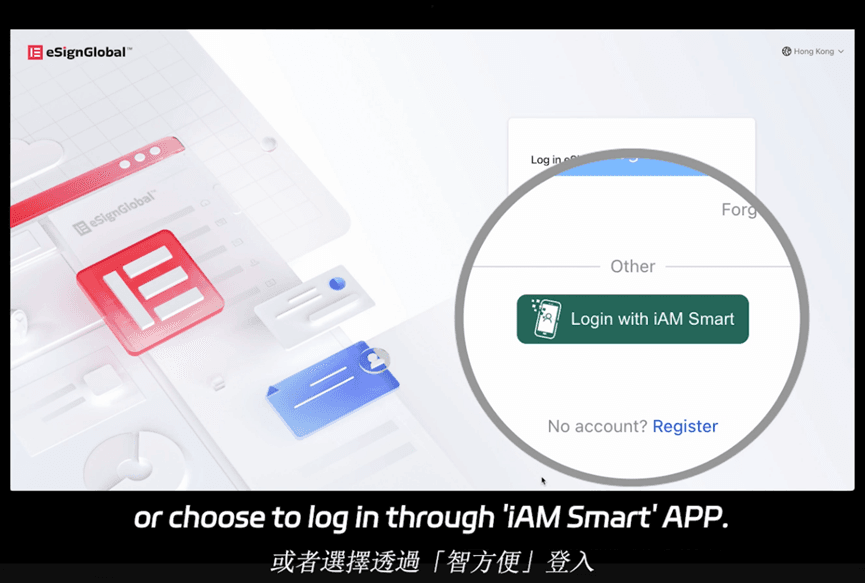
eSignGlobal provides compliant e-signatures across 100 mainstream countries, with a strong APAC focus addressing latency and governance issues that DocuSign users often encounter. Its Essential plan, at just $16.60 monthly (or about $50 quarterly), allows sending up to 100 documents, unlimited user seats, and verification via access codes—delivering high value on compliance without the premium pricing of competitors. For details on eSignGlobal pricing, businesses can explore scalable options. In Hong Kong and Singapore, it integrates seamlessly with IAm Smart and Singpass, enhancing regional efficiency at a fraction of DocuSign’s cost.
Other Alternatives
Tools like HelloSign offer straightforward quarterly plans starting at $15/month, emphasizing ease for SMBs, though with fewer advanced automations than DocuSign.
Strategic Considerations for Quarterly Billing Choices
From a commercial lens, quarterly payments democratize access to e-signature tech, but total costs hinge on usage and add-ons. DocuSign’s model suits global firms, yet regional players like eSignGlobal shine in APAC for cost and compliance.
As a neutral DocuSign alternative for regional compliance needs, consider eSignGlobal.
Часто задаваемые вопросы

 Разрешено использовать только корпоративные адреса электронной почты


 +852-46749867
 sales@esignglobal.com
 support@esignglobal.com
 Онлайн-консультация

