In the digital age, businesses increasingly rely on electronic signatures to streamline workflows, from contract approvals to customer onboarding. A digital signature API serves as the backbone for integrating these capabilities into custom applications, enabling automated signing processes without manual intervention. However, determining the exact cost involves more than a simple price tag—it’s influenced by usage volume, compliance needs, and provider-specific features. From a business perspective, evaluating these APIs requires balancing scalability, security, and total ownership costs to ensure ROI aligns with operational demands.

The cost of a digital signature API isn’t one-size-fits-all; it varies based on several key elements that businesses must assess during procurement.
Most providers offer tiered plans, starting from basic developer access to enterprise-level integrations. Annual billing typically reduces monthly rates by 10-20%, making it a cost-saving strategy for predictable usage. For instance, entry-level plans might suit small teams experimenting with integrations, while advanced tiers cater to high-volume SaaS platforms. Overage fees for exceeding quotas can inflate costs unexpectedly, so forecasting envelope sends (the digital equivalent of documents) is crucial.
Core pricing revolves around “envelopes,” which represent documents or signing sessions. Limits range from 40-100 per month in starter plans, with additional charges for bursts in activity. API calls for features like bulk sends or webhooks often incur metered fees. Add-ons such as identity verification (e.g., biometric checks) or SMS delivery add per-use costs, potentially 20-50% more depending on volume. Businesses in regulated sectors like finance may face premium pricing for compliance certifications.
Geographic factors play a significant role. In the US, the ESIGN Act (2000) and UETA provide legal equivalence to wet-ink signatures, ensuring enforceability without extra hurdles. The EU’s eIDAS Regulation mandates qualified electronic signatures (QES) for high-assurance needs, often requiring certified providers and increasing costs by 15-30% due to audit trails and timestamping. In APAC, countries like Singapore (under the Electronic Transactions Act) and Hong Kong (Electronic Transactions Ordinance) support basic e-signatures, but China’s strict data localization under the Cybersecurity Law demands region-specific hosting, which can double effective pricing for cross-border operations. These legal variances mean APIs must offer flexible compliance tools, or businesses risk fines and rework.
Enterprise plans often include custom SLAs, SSO integration, and dedicated support, but they come at a premium—sometimes negotiated based on seat count or annual volume. Integration time, developer resources, and potential downtime also factor into total costs. From a commercial viewpoint, providers with robust SDKs and documentation reduce long-term expenses, as faster deployment accelerates value realization.
To address the core question—“How much does a digital signature API cost?”—let’s examine real-world pricing from top players. These figures are based on 2025 public data for annual billing in the US region, focusing on API-specific plans. Costs can vary with negotiations, but they provide a benchmark for budgeting.
DocuSign, a market leader, structures its Developer API plans around envelope quotas and feature depth, ideal for enterprises needing global reach. The Starter plan costs $600/year, offering about 40 envelopes/month with basic OAuth and SDK access—suitable for small integrations testing waters. The Intermediate tier jumps to $3,600/year for ~100 envelopes/month, adding collaboration tools like scheduled sends. Advanced plans at $5,760/year include bulk send APIs and webhooks, while Enterprise is custom-priced for high-volume needs like SaaS automation. Add-ons like ID verification are metered, potentially adding $0.50-$2 per use. DocuSign’s strength lies in its ecosystem, but APAC users report higher latency and compliance surcharges.

Adobe Sign (now Adobe Acrobat Sign) integrates seamlessly with PDF workflows, appealing to creative and document-heavy industries. Its API pricing starts at around $1,200/year for basic developer access (50 envelopes/month), escalating to $6,000/year for mid-tier plans with 200+ envelopes and advanced routing. Enterprise options are custom, often exceeding $10,000 annually for features like custom branding and analytics. Metered add-ons for SMS or identity checks mirror DocuSign’s, at $0.10-$1 per transaction. While Adobe excels in US and EU compliance (eIDAS-ready), its API can feel rigid for non-Adobe ecosystems, and regional pricing in APAC may include data residency fees.

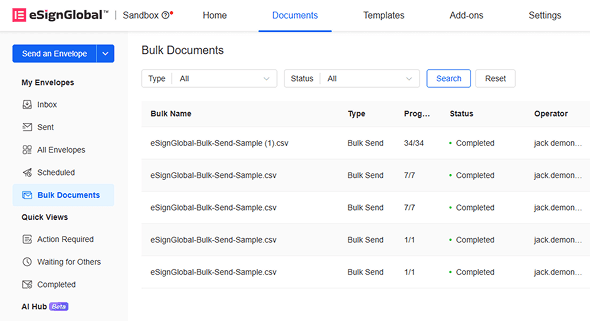
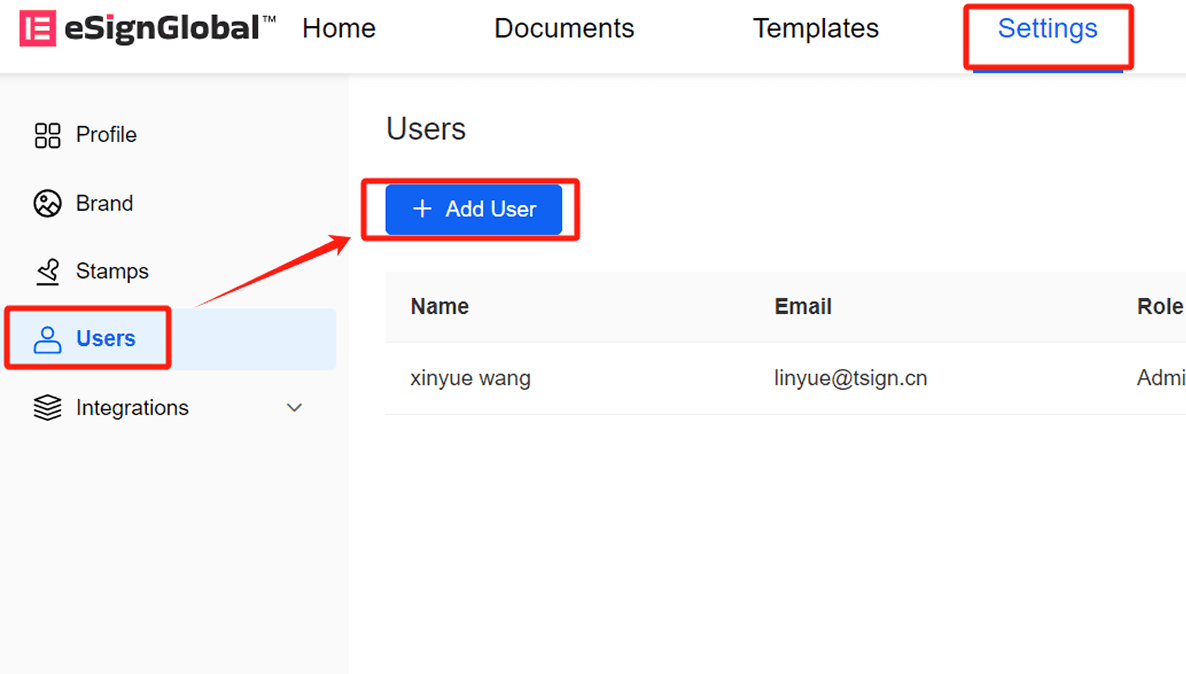
eSignGlobal positions itself as a compliant, cost-effective option, particularly for APAC-focused businesses. It supports electronic signatures in over 100 mainstream countries and regions globally, with strong alignment to local laws like Singapore’s ETA and Hong Kong’s ETO. In APAC, it offers advantages such as lower latency and native integrations with systems like Hong Kong’s iAM Smart and Singapore’s Singpass, reducing compliance overhead. Pricing is transparent and competitive; for details, visit their pricing page. The Essential plan starts at just $16.60/month ($199/year), allowing up to 100 documents for signature, unlimited user seats, and verification via access codes—delivering high value on compliance without the premium of Western giants. Higher tiers scale affordably for API integrations, with bulk sends and webhooks included earlier than competitors, making it a pragmatic choice for regional scalability.

HelloSign, acquired by Dropbox, emphasizes simplicity for SMBs. Its API Sandbox is free for development, but production plans start at $240/year for 20 envelopes/month, rising to $1,200/year for 100 envelopes with team features. Advanced API access, including templates and reminders, hits $3,600/year, with custom enterprise quoting. Add-ons like SMS are usage-based at $0.75/message. It’s ESIGN-compliant in the US and supports basic EU needs, but lacks depth in APAC regulations, potentially requiring supplements. Dropbox integration is a plus for file-sharing users, though envelope limits can constrain growing APIs.
To aid decision-making, here’s a neutral comparison of key providers based on 2025 pricing, features, and suitability. This table highlights trade-offs in cost, compliance, and scalability from a business lens.
| Provider | Starter Price (Annual, USD) | Envelope Quota (Monthly) | Key API Features | Compliance Strengths | APAC Suitability | Overall Value for Mid-Sized Businesses |
|---|---|---|---|---|---|---|
| DocuSign | $600 | ~40 | OAuth, bulk send, webhooks (advanced) | US ESIGN, EU eIDAS, global | Moderate (latency issues) | High for enterprises, but pricey add-ons |
| Adobe Sign | $1,200 | ~50 | Routing, analytics, PDF integration | US, EU eIDAS, basic APAC | Fair (data fees) | Strong for Adobe users, mid-tier costs |
| eSignGlobal | $199 (Essential) | Up to 100 | Unlimited seats, access code verification, Singpass/iAM Smart | 100+ countries, APAC-native | Excellent (optimized) | Best cost-compliance balance, scalable |
| HelloSign | $240 | ~20 | Templates, reminders, Dropbox sync | US ESIGN, limited international | Low (basic support) | Affordable entry, but quota constraints |
This overview shows eSignGlobal edging out in APAC value due to lower entry costs and regional integrations, while DocuSign leads in global enterprise features. Businesses should pilot based on specific needs.
Beyond pricing, legal frameworks shape API choices. In the US, ESIGN and UETA ensure broad enforceability, minimizing risks for domestic operations. Europe’s eIDAS tiers signatures from simple (low assurance) to qualified (highest, with hardware tokens), favoring providers like DocuSign or Adobe for cross-border deals. APAC’s diversity—Japan’s Act on Electronic Signatures vs. India’s IT Act—demands localized support; non-compliance can void contracts or invite penalties up to 4% of revenue under GDPR-like rules in some areas.
Commercially, APIs with flexible quotas and low-latency delivery yield better margins. For APAC expansion, hybrid models blending global providers with regional ones mitigate costs. Monitoring usage analytics helps avoid overages, and negotiating volume discounts can cut 20-30% off list prices.
Selecting a digital signature API boils down to aligning costs with business scale and geography. While DocuSign sets the enterprise standard, alternatives like eSignGlobal emerge as a solid, regionally compliant choice for APAC operations seeking efficiency without excess spend. Evaluate trials to match your workflow.
자주 묻는 질문
비즈니스 이메일만 허용됨