
'%3e%3cpath%20fill-rule='evenodd'%20clip-rule='evenodd'%20d='M6.99935%2012.8327C10.221%2012.8327%2012.8327%2010.221%2012.8327%206.99935C12.8327%203.77769%2010.221%201.16602%206.99935%201.16602C3.77769%201.16602%201.16602%203.77769%201.16602%206.99935C1.16602%2010.221%203.77769%2012.8327%206.99935%2012.8327Z'%20stroke='%23666666'%20stroke-linecap='round'%20stroke-linejoin='round'/%3e%3cpath%20d='M1.16602%207H12.8327'%20stroke='%23666666'%20stroke-linecap='round'%20stroke-linejoin='round'/%3e%3cpath%20fill-rule='evenodd'%20clip-rule='evenodd'%20d='M6.99935%2012.8327C8.28802%2012.8327%209.33268%2010.221%209.33268%206.99935C9.33268%203.77769%208.28802%201.16602%206.99935%201.16602C5.71068%201.16602%204.66602%203.77769%204.66602%206.99935C4.66602%2010.221%205.71068%2012.8327%206.99935%2012.8327Z'%20stroke='%23666666'%20stroke-linecap='round'%20stroke-linejoin='round'/%3e%3cpath%20d='M2.875%202.95898C3.93063%204.01461%205.38896%204.66754%206.99978%204.66754C8.61062%204.66754%2010.069%204.01461%2011.1246%202.95898'%20stroke='%23666666'%20stroke-linecap='round'%20stroke-linejoin='round'/%3e%3cpath%20d='M11.1246%2011.0425C10.069%209.98691%208.61062%209.33398%206.99978%209.33398C5.38896%209.33398%203.93063%209.98691%202.875%2011.0425'%20stroke='%23666666'%20stroke-linecap='round'%20stroke-linejoin='round'/%3e%3c/g%3e%3cdefs%3e%3cclipPath%20id='clip0_1267_9109'%3e%3crect%20width='14'%20height='14'%20fill='white'/%3e%3c/clipPath%3e%3c/defs%3e%3c/svg%3e)


Rocket Lawyer est-il moins cher que DocuSign ?


Rocket Lawyer est-il moins cher que DocuSign ? Une perspective commerciale
Dans le paysage concurrentiel des services de signature numérique et de documents juridiques, les entreprises pèsent souvent le coût par rapport aux fonctionnalités lorsqu'elles choisissent des plateformes comme Rocket Lawyer et DocuSign. À mesure que les entreprises étendent leurs opérations, en particulier dans les environnements de travail à distance et hybrides, les signatures électroniques sont devenues une nécessité pour rationaliser les contrats, les accords et la conformité. Cet article examine si Rocket Lawyer offre une option plus abordable que DocuSign, en se basant sur des données de tarification vérifiées provenant de sources de 2025. Nous allons décomposer leurs modèles de tarification, leurs fonctionnalités et leurs propositions de valeur pour aider votre prise de décision d'un point de vue commercial neutre.

Comprendre les produits de base
Rocket Lawyer : Une plateforme de services juridiques avec signature intégrée
Rocket Lawyer se positionne comme une boîte à outils juridique tout-en-un plutôt qu'un simple outil de signature électronique. Fondée pour démocratiser l'accès à l'aide juridique, elle cible les petites entreprises, les freelances et les particuliers qui ont besoin de documents juridiques à la demande, de consultations et de fonctionnalités de signature électronique. La force de la plateforme réside dans sa bibliothèque de modèles personnalisables pour les contrats, les testaments et les formulaires commerciaux, ainsi que dans les consultations d'avocats et les fonctionnalités de signature électronique groupées.
D'un point de vue commercial, le modèle de Rocket Lawyer séduit les utilisateurs qui souhaitent intégrer un support juridique sans avoir à assembler plusieurs outils. Cependant, ses fonctionnalités de signature électronique sont plus basiques que celles des plateformes spécialisées, se concentrant sur l'exécution simple des documents plutôt que sur les flux de travail avancés tels que l'envoi en masse ou le routage conditionnel.
DocuSign : Leader de la signature électronique de niveau entreprise
DocuSign, pionnier de la signature électronique depuis 2003, domine le marché avec des solutions robustes et évolutives adaptées aux besoins de signature à volume élevé. Largement utilisé par les entreprises pour tout, des contrats de vente à l'intégration des RH, il met l'accent sur la sécurité, la conformité (par exemple, la loi ESIGN, eIDAS) et l'intégration avec les systèmes CRM (comme Salesforce).
Les entreprises apprécient la fiabilité de DocuSign dans les secteurs réglementés tels que la finance et la santé, mais sa tarification peut augmenter avec les modules complémentaires et les niveaux d'utilisation. Selon les données de tarification de 2025, les plans de DocuSign sont basés sur les sièges et les limites d'enveloppes (une « enveloppe » désignant un paquet de documents à signer), ce qui convient aux équipes mais peut être coûteux pour les utilisateurs à faible volume.

Comparaison détaillée des prix : Rocket Lawyer vs DocuSign
Pour répondre à la question centrale : Rocket Lawyer est-il moins cher que DocuSign ? – analysons leurs structures de prix de 2025. Les deux offrent des réductions pour la facturation annuelle, mais avec des approches différentes : Rocket Lawyer met l'accent sur l'adhésion pour un accès illimité, tandis que DocuSign facture par utilisateur et par enveloppe.
Décomposition des prix de Rocket Lawyer
Rocket Lawyer utilise un modèle d'adhésion par abonnement qui comprend la création illimitée de documents, les signatures électroniques et les consultations juridiques. Les principaux plans comprennent :
- Adhésion de base : 19,99 $/mois ou 239,88 $/an (facturation annuelle, environ 20 % d'économies). Cela couvre les documents juridiques illimités, les signatures électroniques pour un maximum de 5 documents par mois et l'accès aux questions-réponses avec un avocat.
- Adhésion Premium : 39,99 $/mois ou 399,96 $/an. Débloque les signatures électroniques illimitées, le support prioritaire d'un avocat et les réductions sur les services juridiques (par exemple, 25 % de réduction sur la planification successorale).
- Documents uniques : Pour les non-membres, les documents uniques commencent à 39,99 $, avec des signatures électroniques supplémentaires à 5 à 10 $ par document.
Des coûts supplémentaires peuvent provenir de modèles premium ou d'examens accélérés par un avocat, mais le forfait de base de signature électronique n'a pas de frais par enveloppe. Pour les petites entreprises qui envoient moins de 20 documents par mois, le coût total pour un seul utilisateur peut être inférieur à 300 $ par an, y compris les services juridiques supplémentaires. Cependant, l'extension à une équipe augmente linéairement les coûts, et les fonctionnalités avancées telles que l'intégration API sont limitées ou nécessitent des devis d'entreprise personnalisés.
D'un point de vue de rentabilité, Rocket Lawyer convient aux entrepreneurs individuels ou aux micro-équipes qui ont besoin de documents juridiques et de signatures occasionnels. Il est particulièrement économique si vos processus impliquent davantage de génération de documents que de signatures à volume élevé.
Décomposition des prix de DocuSign
Les plans eSignature de DocuSign sont plus granulaires, se concentrant sur les sièges d'utilisateurs et les quotas d'enveloppes. Basé sur les prix officiels de 2025 aux États-Unis (facturation annuelle) :
- Plan personnel : 10 $/mois (120 $/an) pour 1 utilisateur, limité à 5 enveloppes par mois. Convient aux particuliers, mais restrictif pour les entreprises.
- Plan standard : 25 $/utilisateur/mois (300 $/utilisateur/an), jusqu'à 100 enveloppes/utilisateur par an. Comprend les modèles d'équipe, les commentaires et les rappels.
- Plan Business Pro : 40 $/utilisateur/mois (480 $/utilisateur/an), 100 enveloppes/utilisateur par an. Ajoute des formulaires Web, l'envoi en masse, la logique conditionnelle et la collecte de paiements.
- Entreprise/Premium : Tarification personnalisée, à partir d'environ 50 $/utilisateur/mois, comprenant SSO, pistes d'audit et enveloppes illimitées (sous réserve de limites d'utilisation équitable).
Les modules complémentaires augmentent les coûts : l'authentification d'identité (IDV) est facturée à l'utilisation (par exemple, 0,50 $ par vérification), la livraison par SMS ajoute des frais par message (0,10 à 0,50 $), et les plans API vont de 600 $/an (niveau d'entrée, 40 enveloppes par mois) à 5 760 $/an (premium). Pour une équipe Business Pro de 5 utilisateurs, les frais de base devraient être de 2 400 $/an, plus les frais supplémentaires pour l'automatisation ou la conformité.
Les plafonds d'enveloppes de DocuSign (par exemple, environ 10 envois automatisés/utilisateur par mois) peuvent entraîner des frais de dépassement, ce qui le rend plus coûteux pour les charges de travail variables. Les entreprises signalent des coûts réels de 20 à 50 % supérieurs à la publicité en raison de ces limitations.
Analyse directe des coûts : Rocket Lawyer est-il moins cher ?
Oui, pour les utilisateurs à petite échelle ou à faible volume, Rocket Lawyer est généralement moins cher que DocuSign, mais l'écart se réduit pour les entreprises. Pour un professionnel indépendant qui envoie 10 à 20 documents par trimestre :
- Rocket Lawyer Premium : environ 400 $/an, couvrant les signatures illimitées et les modèles juridiques – sans surprise de frais par enveloppe.
- DocuSign Standard : 300 $/an pour un utilisateur, mais seulement 100 enveloppes au total ; le dépassement de cette limite entraîne des frais de 0,10 à 1 $/enveloppe supplémentaire ou une mise à niveau du plan.
Les économies avec Rocket Lawyer peuvent atteindre 30 à 50 % par an pour les besoins de base, car son adhésion évite les frais basés sur l'utilisation de DocuSign. Cependant, si votre entreprise a besoin d'un routage avancé, d'un envoi en masse ou d'une automatisation API (courant pour les équipes de vente), les 480 $/utilisateur/an de DocuSign deviennent raisonnables, tandis que Rocket Lawyer manque de profondeur – poussant les utilisateurs vers des modules complémentaires ou des alternatives.
Pour les équipes de taille moyenne (5 à 10 utilisateurs), l'extension par membre de Rocket Lawyer (environ 2 000 $/an au total) est inférieure à la base de 1 500 à 2 400 $ de DocuSign, mais DocuSign offre un meilleur retour sur investissement grâce à l'intégration et aux certifications de conformité. Les frais de dépassement modifient l'équilibre : une entreprise qui atteint 500 enveloppes par an pourrait payer plus de 3 000 $ sur DocuSign, tandis que Rocket Lawyer est à un tarif fixe.
En résumé, pour les utilisateurs occasionnels ou axés sur le juridique, Rocket Lawyer gagne en matière d'abordabilité (jusqu'à 40 % moins cher), mais DocuSign excelle dans les environnements à volume élevé et riches en fonctionnalités où le coût total de possession comprend les gains de temps grâce à des outils supérieurs. Les entreprises doivent auditer leur volume d'enveloppes et leurs besoins d'intégration pour quantifier les véritables économies.
Explorer les alternatives à DocuSign : Adobe Sign, eSignGlobal, etc.
Bien que Rocket Lawyer offre un point d'entrée rentable, la domination de DocuSign suscite un examen des concurrents. D'un point de vue commercial, des alternatives comme Adobe Sign offrent une intégration PDF transparente, tandis que les acteurs régionaux comblent les lacunes en matière de conformité mondiale.
Adobe Sign : Intégration avec l'écosystème Adobe
Adobe Sign, en tant que partie d'Adobe Document Cloud, excelle dans la gestion des documents, étroitement liée à la puissante édition PDF. Les prix commencent à 22,99 $/utilisateur/mois (facturation annuelle, environ 276 $/an) pour les particuliers, s'étendant aux équipes à 39,99 $/utilisateur/mois (environ 480 $/an), comprenant les signatures illimitées et les flux de travail avancés. Les plans d'entreprise sont personnalisés, généralement à partir de 50 $/utilisateur/mois, comprenant la conformité eIDAS et l'accès API.
C'est un concurrent fiable de DocuSign, adapté aux secteurs créatifs ou à forte densité de PDF, mais les modules complémentaires tels que l'authentification SMS ajoutent 1 à 3 $/utilisation, et la flexibilité est moindre pour les utilisateurs non-Adobe. Les coûts sont étroitement alignés sur le plan Business Pro de DocuSign, ce qui le rend comparable plutôt que moins cher.

eSignGlobal : Un concurrent mondial axé sur la conformité
eSignGlobal émerge comme une alternative polyvalente, prenant en charge les signatures électroniques dans plus de 100 pays et régions principaux, avec une conformité réglementaire totale. Il détient une forte présence sur le marché Asie-Pacifique (APAC), où les retards transfrontaliers et les règles de résidence des données mettent à l'épreuve les outils centrés sur les États-Unis. La tarification est particulièrement compétitive : le plan Essential est à seulement 16,60 $/mois (facturation annuelle), permettant jusqu'à 100 documents signés, des sièges d'utilisateurs illimités et une vérification par code d'accès – le tout construit sur une base de conformité, offrant une grande valeur.
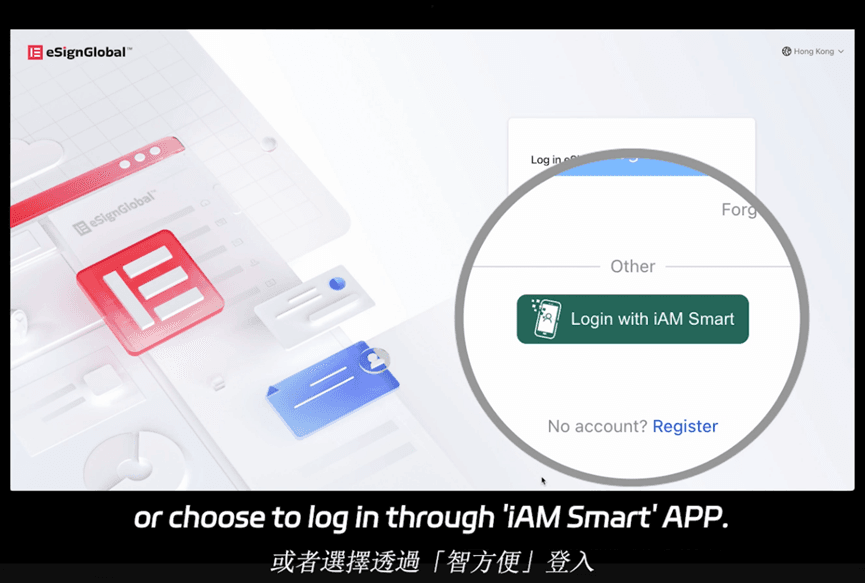
Pour plus de détails sur la tarification d'eSignGlobal, les entreprises peuvent explorer des options personnalisées qui évitent les plafonds d'enveloppes de DocuSign. Il s'intègre de manière transparente aux systèmes régionaux tels que iAM Smart à Hong Kong et Singpass à Singapour, réduisant les frictions de configuration pour les opérations APAC. Bien qu'il ne soit pas le moins cher, son efficacité par document et ses sièges illimités le rendent 20 à 30 % moins cher que DocuSign pour les équipes dans les régions à forte conformité, sans sacrifier la sécurité.
D'autres options notables incluent HelloSign (un outil de Dropbox, à partir de 15 $/utilisateur/mois) et PandaDoc (19 $/utilisateur/mois, avec des fonctionnalités de proposition), qui ciblent les flux de travail de vente, mais peuvent manquer de conformité mondiale étendue.
Comparaison des prix et des fonctionnalités des concurrents
Pour aider les entreprises à évaluer, voici un tableau de comparaison neutre basé sur les prix annuels des plans d'équipe standard de 2025 (par utilisateur, sauf indication contraire). L'accent est mis sur le coût, les enveloppes/signatures et les atouts en matière de conformité.
| Plateforme | Prix de départ (annuel, par utilisateur) | Limite d'enveloppes/signatures | Principales fonctionnalités | Atouts en matière de conformité | Idéal pour |
|---|---|---|---|---|---|
| DocuSign | 300 $ (Standard) | ~100/an | Envoi en masse, API, paiements | ESIGN, eIDAS, mondial | Entreprises, volume élevé |
| Rocket Lawyer | 240 $ (Basique, adhésion) | Illimité (avec des limites sur les fonctionnalités avancées) | Modèles juridiques, questions-réponses avec un avocat | Conformité de base aux États-Unis | Petites entreprises, documents juridiques |
| Adobe Sign | 276 $ (Individuel) | Illimité | Intégration PDF, flux de travail | eIDAS, RGPD | Équipes à forte densité de PDF |
| eSignGlobal | 199 $ (Essentiel, sièges illimités) | 100/mois | Vérification par code d'accès, intégrations APAC | Plus de 100 pays, iAM Smart/Singpass | Conformité APAC/mondiale, sensible aux coûts |
| HelloSign | 180 $ | Illimité | Interface utilisateur simple, synchronisation Dropbox | ESIGN, international de base | PME, facilité d'utilisation |
| PandaDoc | 228 $ | Illimité | Propositions, analyses | ESIGN, quelques éléments mondiaux | Équipes de vente |
Ce tableau met en évidence la tarification équilibrée et les atouts régionaux d'eSignGlobal, bien que le choix dépende des besoins spécifiques, tels que la profondeur de l'API (DocuSign en tête) ou les offres groupées juridiques (Rocket Lawyer).
Réflexions finales sur le choix du bon outil
Lorsqu'il s'agit de peser Rocket Lawyer par rapport à DocuSign, l'abordabilité favorise le premier pour les besoins modestes, mais l'évolutivité penche vers le second pour les opérations complexes. Pour les entreprises à la recherche d'une alternative à DocuSign avec une forte conformité régionale, eSignGlobal se distingue comme un choix pratique et axé sur la valeur. Évaluez en fonction de votre volume, de votre emplacement géographique et de vos besoins d'intégration pour optimiser les coûts sans compromettre l'efficacité.
