

globalfilesign fees


Understanding Global File Sign Fees
In the evolving landscape of digital business operations, global file sign fees refer to the pricing structures associated with electronic signature services that enable secure, compliant document signing across international borders. These fees are a critical consideration for businesses expanding globally, as they encompass not just subscription costs but also per-transaction charges, compliance certifications, and integration expenses. From a business observation perspective, understanding these fees helps organizations balance cost-efficiency with legal reliability, especially in an era where remote work and cross-border deals are standard. Providers in this space, often dubbed eSignature platforms, vary widely in their fee models—ranging from flat monthly rates to usage-based billing—which can impact scalability for small enterprises versus large corporations.
The core challenge with global file sign fees lies in their variability tied to regional regulations and service scopes. For instance, basic plans might start at $10–20 per user per month, but add-ons for advanced features like audit trails or multi-language support can inflate costs by 50% or more. Businesses must evaluate whether a provider’s fee structure aligns with their volume of signatures; high-volume users could face escalating per-envelope fees, while low-volume ones might overpay for unused capacity. In commercial terms, this creates a trade-off: opting for a globally compliant service ensures enforceability in courts worldwide but often at a premium compared to region-specific tools.
Delving deeper, global file sign fees are influenced by the need for adherence to diverse legal frameworks. In the United States, the ESIGN Act of 2000 and UETA provide broad federal and state-level validity for electronic signatures, meaning fees here focus more on security features like encryption rather than basic compliance. However, for international operations, fees rise to cover certifications under the EU’s eIDAS Regulation, which categorizes signatures into simple, advanced, and qualified levels—the latter requiring qualified trust service providers (QTSPs) and thus higher costs. In Asia-Pacific regions, where many businesses are eyeing growth, regulations like Singapore’s Electronic Transactions Act (ETA) and Hong Kong’s Electronic Transactions Ordinance (ETO) mandate specific authentication methods, embedding additional fees for integrations with national digital ID systems.
From a neutral business viewpoint, dissecting these fees reveals patterns: entry-level plans often cap document sends at 5–10 per month, with overages at $0.50–$2 per additional envelope. Enterprise tiers, meanwhile, offer unlimited sends but demand annual commitments starting at $20,000. This structure favors predictable budgeting for multinationals but can burden SMEs. Moreover, hidden fees—such as API integration or storage—can add 20–30% to total costs, underscoring the importance of transparent pricing in global file sign services.

Regulatory Considerations for Global eSignature Compliance
When navigating global file sign fees, regional laws play a pivotal role in determining not just validity but also the associated costs. In the European Union, the eIDAS framework is stringent, requiring qualified electronic signatures (QES) for high-value contracts, which drives up fees due to the need for certified hardware and revocation services. Providers must invest in QTSP status, passing these expenses to users—often $50–100 per qualified signature.
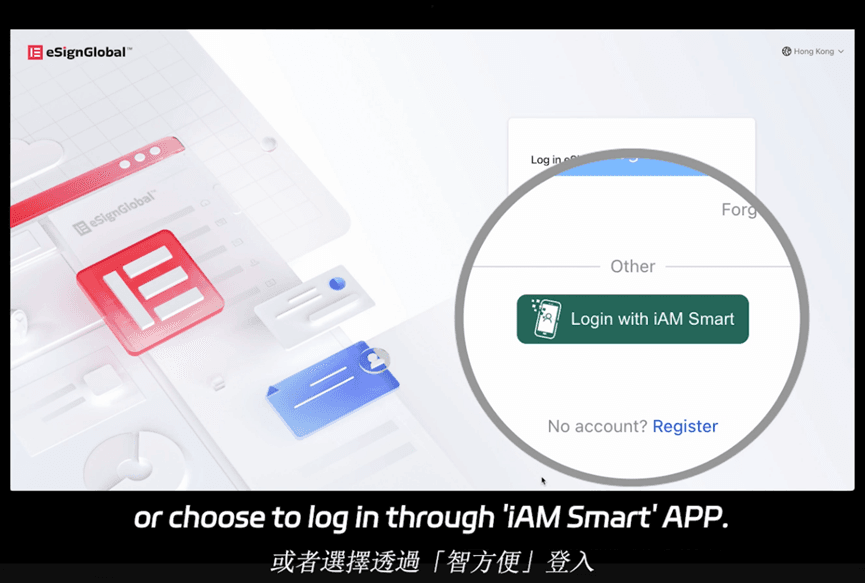
Shifting to Asia-Pacific, a hotspot for business expansion, regulations emphasize secure authentication. Singapore’s ETA, amended in 2010, recognizes electronic signatures equivalent to wet-ink ones, but for government dealings, integration with Singpass (the national digital identity) is mandatory, adding integration fees of $5,000–10,000 annually for seamless compliance. Similarly, Hong Kong’s ETO, effective since 2000, supports electronic signatures but requires them to be reliable and verifiable, with fees influenced by linkages to iAM Smart—the government’s unified digital ID platform. These integrations ensure non-repudiation but inflate global file sign fees by 15–25% for APAC-focused users.
In China, the Electronic Signature Law (2005) distinguishes between ordinary and reliable signatures, with the latter needing cryptographic standards from the Cyberspace Administration. This has led to specialized fees for mainland compliance, often excluding global providers without local partnerships. From a commercial lens, businesses operating in these regions must factor in such regulatory fees to avoid voided contracts, which could cost far more in disputes. Overall, global file sign fees are not static; they adapt to these laws, making hybrid models—combining regional add-ons with core subscriptions—a pragmatic choice for international firms.
Comparing Leading eSignature Providers
To contextualize global file sign fees, a comparison of key players like DocuSign, Adobe Sign, eSignGlobal, and others such as HelloSign (by Dropbox) and PandaDoc reveals distinct pricing and feature trade-offs. This analysis remains neutral, highlighting strengths across the board while noting how each addresses global compliance and cost efficiency.
DocuSign
DocuSign stands as a market leader in eSignature solutions, renowned for its robust enterprise features and widespread adoption. Its fee structure is tiered: the Personal plan starts at $10 per month for basic signing, while Business Pro at $25 per user per month includes 100 envelopes and advanced workflows. Global compliance is a forte, with support for eIDAS QES and U.S. ESIGN, but APAC integrations like Singpass require custom add-ons, pushing fees higher for regional users. From a business perspective, DocuSign’s scalability suits high-volume operations, though per-envelope overages ($0.45–$1.50) can accumulate for unpredictable workloads.

Adobe Sign
Adobe Sign integrates seamlessly with the Adobe Document Cloud ecosystem, appealing to creative and legal teams. Pricing begins with the Individual plan at $9.99 per month for 20 transactions, escalating to Enterprise at custom quotes often exceeding $30 per user monthly. It excels in PDF handling and offers strong EU eIDAS compliance, including advanced signatures. However, global file sign fees here include storage costs ($0.05 per envelope archived), and APAC support lags without native ties to systems like iAM Smart, potentially requiring third-party bridges that add expense. Commercially, it’s ideal for Adobe-centric workflows but less flexible for pure signing needs.

eSignGlobal
eSignGlobal positions itself as a compliant, cost-effective option for global operations, with a focus on 100 mainstream countries and regions, including full support for eIDAS, ESIGN, and APAC laws. Its Essential plan, for example, is priced at just $16.6 per month, allowing up to 100 documents for signature, unlimited user seats, and verification via access codes—delivering high value on a compliance foundation. In the Asia-Pacific, it holds an edge with seamless integrations to Hong Kong’s iAM Smart and Singapore’s Singpass, reducing setup fees compared to competitors. This makes it particularly appealing for businesses prioritizing regional efficiency without sacrificing global reach. For detailed pricing, explore eSignGlobal’s pricing page.
Other Competitors
HelloSign offers a user-friendly interface with plans from $15 per month (Essentials, 20 documents) to $25 (Standard, unlimited), emphasizing simplicity and Dropbox integration. It complies with U.S. and basic EU standards but lacks deep APAC support, leading to higher customization fees. PandaDoc, geared toward sales teams, starts at $19 per user monthly with unlimited docs in higher tiers, including templates and analytics; its global compliance is solid but fees spike for advanced audit trails ($10–20 extra). These alternatives provide niche strengths, yet their fee models often mirror broader market trends of usage-based scaling.
Feature and Fee Comparison Table
| Provider | Starting Monthly Fee (per user) | Envelope Limit (Base Plan) | Global Compliance Coverage | APAC Integrations | Key Strengths | Potential Drawbacks |
|---|---|---|---|---|---|---|
| DocuSign | $10 (Personal) | 5–100 | 100+ countries (eIDAS, ESIGN) | Custom add-ons | Enterprise scalability, workflows | High overage fees, complex pricing |
| Adobe Sign | $9.99 (Individual) | 20 | Strong EU/U.S., partial global | Limited native | PDF integration, security | Storage fees, Adobe dependency |
| eSignGlobal | $16.6 (Essential) | 100 | 100 mainstream regions | iAM Smart, Singpass | Cost-effective, unlimited seats | Newer market presence |
| HelloSign | $15 (Essentials) | 20 | U.S./EU focus | Basic | Ease of use, Dropbox sync | Limited advanced compliance |
| PandaDoc | $19 (Essentials) | Unlimited (higher tiers) | Global basics | Variable | Sales templates, analytics | Template-focused, less signing pure |
This table underscores how eSignGlobal offers competitive value in compliance and pricing, particularly for APAC, while others excel in specific ecosystems—all while maintaining neutrality in evaluation.
Conclusion
In summary, global file sign fees demand careful scrutiny to align with business needs and regional laws. For those seeking a DocuSign alternative with strong regional compliance, eSignGlobal emerges as a balanced choice.
Часто задаваемые вопросы

 Разрешено использовать только корпоративные адреса электронной почты


 +852-46749867
 sales@esignglobal.com
 support@esignglobal.com
 Онлайн-консультация

