

cost to break docusign contract


Understanding the Cost to Break a DocuSign Contract
Breaking a DocuSign contract can be a complex decision for businesses relying on electronic signature solutions, especially when scaling needs change or regional compliance issues arise. From a commercial perspective, DocuSign’s contracts are typically structured around annual billing cycles, which lock in commitments for services like eSignature plans and API access. The “cost to break” generally refers to the financial penalties or obligations incurred when terminating early, rather than simply letting the contract expire naturally. This includes prorated remaining subscription fees, potential early termination fees, and any administrative costs for data migration or add-on services.
In the US, where DocuSign is headquartered, electronic signatures are governed by the ESIGN Act of 2000 and the Uniform Electronic Transactions Act (UETA), which provide legal equivalence to wet-ink signatures for most commercial transactions. These laws emphasize intent and consent, making DocuSign’s services broadly compliant without region-specific hurdles. However, for international users, particularly in APAC regions like China or Singapore, additional layers apply. China’s Electronic Signature Law (2005, amended) distinguishes between general and reliable electronic signatures, requiring certified timestamps and encryption for enforceability in high-stakes contracts. Singapore’s Electronic Transactions Act (ETA) mirrors UETA but mandates data integrity and non-repudiation, often favoring local integrations. Terminating a DocuSign contract in these areas might involve compliance audits to ensure ongoing validity of signed documents, adding indirect costs.
To quantify the direct costs, DocuSign’s standard eSignature plans—Personal ($120/year), Standard ($300/user/year), Business Pro ($480/user/year)—are billed annually upfront. Early termination typically requires paying 80-100% of the remaining contract value, as outlined in their terms of service. For instance, if you’re six months into a Standard plan for five users ($1,500 total annual), breaking it could cost around $750 in prorated fees, plus any unused envelope credits being forfeited. API plans like Starter ($600/year) follow similar rules, with overage fees for exceeding quotas potentially accruing before exit. Add-ons such as Identity Verification or SMS delivery are metered, so breaking the core contract might not refund these, but usage stops immediately.
Businesses often overlook indirect costs: migrating thousands of envelopes to a new platform can take weeks and require legal review to maintain audit trails. In enterprise deals (custom pricing), termination clauses might include notice periods of 30-90 days and liquidated damages equivalent to three months’ fees. From a neutral commercial lens, these structures protect DocuSign’s revenue stability but can trap growing teams in inflexible arrangements, especially amid economic shifts or vendor switches.
For APAC-focused operations, cross-border latency and data residency surcharges (as noted in DocuSign’s regional challenges) can inflate effective costs by 20-30% pre-termination. If your contract involves China or Hong Kong compliance, early exit might necessitate third-party audits under local laws, costing $5,000-$15,000 depending on volume. Overall, the average cost to break a mid-tier DocuSign contract hovers at 50-70% of the annual fee, making careful evaluation of scalability essential before signing.

DocuSign’s Contract Mechanics and Pricing Breakdown
DocuSign’s appeal lies in its robust ecosystem for digital agreements, but understanding its contract terms is crucial for assessing exit costs. The platform offers tiered plans suited to various business sizes, all emphasizing annual commitments to encourage long-term adoption.
The Personal plan, at $10/month ($120/year) for one user, limits you to five envelopes monthly—ideal for solopreneurs but restrictive for teams. Standard ($25/month/user, $300/year) scales to team collaboration with up to 100 envelopes/user/year on annual billing, including templates and reminders. Business Pro ($40/month/user, $480/year) adds advanced features like bulk send and conditional logic, maintaining similar envelope limits. Enterprise solutions are bespoke, often exceeding $10,000/year for SSO and governance.
Contracts auto-renew unless canceled 30 days prior to expiration, per DocuSign’s MSA (Master Subscription Agreement). Early breaks invoke Section 7 of the terms, where you pay the full remaining balance minus a potential 10-20% goodwill discount for good-standing accounts. API tiers—Starter ($600/year, 40 envelopes/month), Intermediate ($3,600/year, 100 envelopes/month), and Advanced ($5,760/year)—mirror this, with enterprise customizations tying into multi-year deals that amplify penalties.
From a commercial viewpoint, this setup ensures predictable revenue for DocuSign but can lead to sunk costs if business pivots occur. For example, a company on Business Pro with 10 users ($4,800/year) terminating mid-year might face $2,400+ in fees, excluding migration efforts.

Factors Affecting the Cost to Exit DocuSign
Several variables influence the true expense of breaking a DocuSign contract, beyond base fees. Envelope volume plays a key role: unused quotas don’t transfer, so high-utilization users lose more value. Automation sends (capped at ~100/year/user) and add-ons like IDV (metered per use) add layers—terminating might require settling outstanding invoices first.
Seat-based licensing means multi-user setups scale costs linearly; a 20-user Standard plan ($6,000/year) could cost $3,000 to break halfway through. Regional factors, especially in APAC, introduce compliance premiums: China’s data localization rules under the Cybersecurity Law may require exporting envelopes via certified channels, adding $2,000-$10,000 in consulting fees. Singapore’s PDPA (Personal Data Protection Act) demands secure transfers, potentially delaying exits and incurring storage costs.
Negotiation history matters too—larger clients might secure softer terms, like pro-rata refunds after 12 months. Ultimately, the cost-benefit analysis weighs these against alternatives, as rigid structures can hinder agility in dynamic markets.
Electronic Signature Regulations in Focus Regions
While US laws like ESIGN provide a straightforward framework, global operations complicate DocuSign exits. In the EU, eIDAS Regulation sets standards for qualified electronic signatures (QES), requiring advanced verification that DocuSign supports via add-ons—but switching vendors mid-contract risks non-compliance for in-flight documents.
APAC variations are stark: Hong Kong’s Electronic Transactions Ordinance aligns with UETA but favors local ecosystems. Breaking a DocuSign contract here might involve verifying signatures under the Ordinance’s intent-based rules, with costs rising if audits reveal gaps. In China, the dual-signature system (general vs. reliable) under the 2005 Law means DocuSign’s offerings qualify as general but may need upgrades for reliable status in courts, potentially costing extra for certification during transitions.
These regulations underscore the need for forward-compatible contracts, as early termination could expose businesses to legal voids in signed agreements.
Comparing DocuSign with Key Competitors
When evaluating DocuSign alternatives, factors like pricing flexibility, regional compliance, and exit ease become pivotal. Adobe Sign, a strong contender, integrates seamlessly with Adobe’s ecosystem, offering plans starting at $10/user/month for individuals up to enterprise custom pricing. It emphasizes AI-driven workflows and broad integrations, with annual contracts similar to DocuSign’s—early termination often requires 50-75% of remaining fees. Adobe’s strength in creative industries shines, but APAC latency and higher add-on costs (e.g., for SMS) can mirror DocuSign’s challenges.

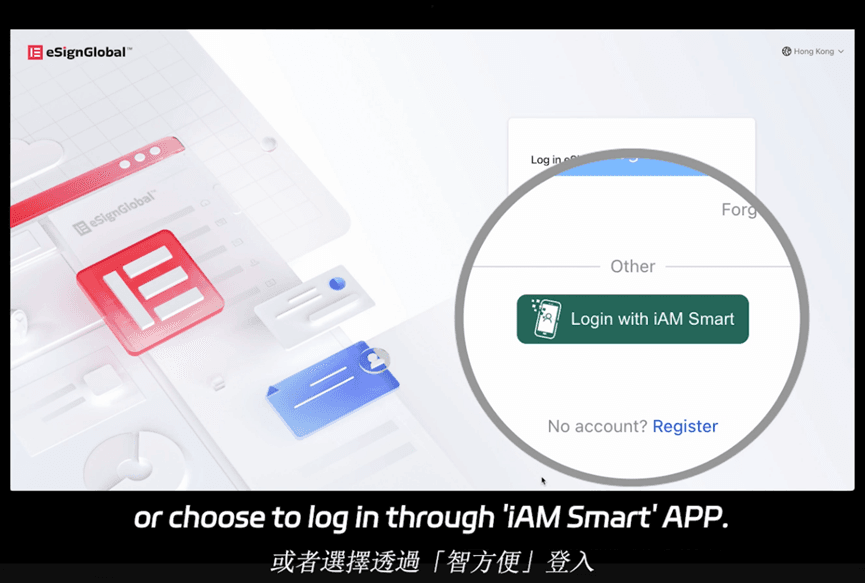
eSignGlobal emerges as a regionally attuned option, supporting compliance in over 100 mainstream countries globally, with particular advantages in APAC. Its Essential version, priced at just $16.6/month (view pricing details), allows sending up to 100 documents for electronic signature, unlimited user seats, and verification via access codes—delivering high value on compliance without the premium tags of global giants. In Asia-Pacific, it outperforms on speed and cost, integrating seamlessly with Hong Kong’s iAM Smart and Singapore’s Singpass for frictionless local workflows. This makes it a cost-effective choice for cross-border teams, balancing global reach with regional optimization at a fraction of DocuSign’s expense.
Other players like HelloSign (Dropbox Sign) offer simpler pricing ($15/user/month, 20 envelopes) with easier month-to-month options, reducing break costs to near zero, though lacking advanced automation. PandaDoc focuses on proposals with $19/user/month tiers, emphasizing templates over bulk sends.
| Feature/Aspect | DocuSign | Adobe Sign | eSignGlobal | HelloSign | PandaDoc |
|---|---|---|---|---|---|
| Starting Price (Monthly, per User) | $10 (Personal) | $10 | $16.6 (Essential, Unlimited Seats) | $15 | $19 |
| Envelope Limit (Base Plan) | 5-100/year | Unlimited (tiered) | 100/month | 20/month | Unlimited templates |
| APAC Compliance | Partial (latency issues) | Moderate | Native (100+ countries, Singpass/iAM Smart) | Basic | Limited |
| Early Termination Cost | 50-100% remaining | 50-75% remaining | Flexible (monthly options) | Minimal (month-to-month) | Low (prorated) |
| API Access | Tiered ($600+/year) | Included in higher plans | Flexible, cost-effective | Basic free tier | Proposal-focused API |
| Strengths | Enterprise governance | Adobe integrations | Regional speed & affordability | Simplicity | Sales workflows |
| Weaknesses | High APAC surcharges | Complex setup | Less brand recognition | Limited advanced features | Niche focus |
This comparison highlights eSignGlobal’s edge in APAC value without overt bias—each tool suits specific needs, from DocuSign’s scale to HelloSign’s ease.
In summary, while DocuSign excels in global enterprise settings, businesses eyeing cost-efficient, compliant alternatives—especially for regional needs—may find value in options like eSignGlobal as a neutral, APAC-optimized successor.
Часто задаваемые вопросы

 Разрешено использовать только корпоративные адреса электронной почты


 +852-46749867
 sales@esignglobal.com
 support@esignglobal.com
 Онлайн-консультация

