dochub pro pricing


Understanding DocuSign Pro Pricing in 2025
In the evolving landscape of digital signature solutions, DocuSign remains a dominant player, particularly with its Business Pro plan catering to teams needing advanced workflow automation. As businesses seek efficient, compliant e-signature tools, pricing transparency becomes crucial for decision-making. This article delves into DocuSign’s Business Pro pricing structure, drawing from official 2025 data, while offering a balanced commercial perspective on its value proposition.
DocuSign’s Business Pro plan is positioned as a mid-to-high-tier offering within its eSignature suite, ideal for organizations handling complex document processes. Priced at $40 per user per month (or $480 per user annually when billed yearly), it supports up to 50 users per account and includes envelope limits of approximately 100 per user per year on annual plans—translating to about 10 envelopes monthly for monthly billing. Envelopes refer to individual document packages that can contain multiple signatures and attachments, making this a scalable option for sales, HR, and legal teams.
What sets Business Pro apart from lower tiers like Personal ($10/month for 5 envelopes) or Standard ($25/month per user) is its emphasis on automation and integration. Core inclusions encompass web forms for interactive data collection, conditional logic to streamline fields based on user inputs, signer attachment requests, and in-process payment collection via integrated gateways. Bulk Send functionality allows dispatching documents to hundreds of recipients simultaneously, a boon for high-volume operations like contract renewals or onboarding campaigns. However, automation sends—such as those via Bulk Send, PowerForms, or APIs—are capped at around 100 per user annually, even in higher plans, to manage server loads and ensure compliance.
From a commercial standpoint, this pricing reflects DocuSign’s strategy of seat-based licensing combined with usage metering. Add-ons like Identity Verification (IDV) incur extra metered fees for features such as biometric checks or SMS authentication, potentially adding 20-50% to costs for security-focused industries like finance or healthcare. SMS/WhatsApp delivery also follows a per-message model, influenced by regional telecom rates, which can escalate expenses in international deployments. For API users, the Advanced Developer plan at $5,760 annually unlocks Bulk Send APIs and webhooks but maintains similar envelope quotas, underscoring DocuSign’s push toward enterprise customization where public pricing ends.
Businesses evaluating DocuSign Pro should factor in total cost of ownership. While the base rate seems competitive, envelope overages, regional compliance surcharges (notably in APAC with data residency issues), and premium support can inflate budgets. For a 10-user team with moderate automation, annual costs might hover around $5,000-$7,000, excluding add-ons. This model rewards long-term commitments via annual billing discounts but may deter startups wary of variable fees.

Key Considerations for DocuSign Pro Adoption
Adopting DocuSign Business Pro involves assessing not just pricing but alignment with operational needs. The plan excels in global compliance, supporting standards like eIDAS in Europe and ESIGN in the US, with robust audit trails for legal defensibility. Integration with tools like Salesforce, Microsoft Office, and Google Workspace enhances productivity, reducing manual handling by up to 80% in typical workflows.
However, limitations persist. Envelope caps can constrain high-volume users, prompting upgrades to custom Enterprise plans where pricing is negotiated based on volume and seats—often starting at $600+ per user annually with SSO and advanced governance. In APAC regions, cross-border latency and limited local IDV options add friction, potentially increasing effective costs by 15-30% due to governance tools and support premiums.
Commercially, DocuSign’s pricing strategy prioritizes upselling through add-ons and APIs, boosting average revenue per user (ARPU). For 2025, this positions it well against economic pressures, but teams must audit usage patterns to avoid surprises. Sandbox testing via the free Developer tier (with limited quotas) is advisable before committing.
Comparing DocuSign with Leading Competitors
To provide a holistic view, let’s compare DocuSign Business Pro with key rivals: Adobe Sign, eSignGlobal, and others like PandaDoc and Dropbox Sign. This analysis highlights pricing, features, and regional strengths from a neutral commercial lens, based on 2025 public data.
| Feature/Aspect | DocuSign Business Pro | Adobe Sign | eSignGlobal Essential | PandaDoc | Dropbox Sign |
|---|---|---|---|---|---|
| Base Pricing (per user/month, annual) | $40 | $23 (Standard) | $16.6 (Unlimited seats) | $19 (Essentials) | $15 (Standard) |
| Envelope/Document Limit | ~100/year/user | Unlimited (with fair use) | Up to 100/month | Unlimited templates, 100 docs/month | Unlimited |
| Key Features | Bulk Send, conditional logic, payments, web forms | AI-powered forms, Acrobat integration, mobile signing | Access code verification, unlimited users, regional integrations (e.g., Singpass) | Proposal automation, CRM sync | Simple sharing, basic workflows |
| Compliance & Regions | Global (eIDAS, ESIGN), APAC challenges | Strong US/EU, limited APAC depth | 100+ countries, APAC-optimized (HK/SG/ID) | US-focused, basic international | Global basics, no advanced IDV |
| Add-ons Cost | Metered (IDV, SMS extra) | Bundled in higher tiers | Low-cost regional auth | Analytics extra (~$10/user) | Storage-based |
| API Access | $5,760/year Advanced | Included in Business ($37/month) | Flexible, cost-effective | Robust, included | Basic, add-on |
| Best For | Enterprise automation | Adobe ecosystem users | APAC compliance & value | Sales proposals | Casual teams |
| Overall Value (Commercial Rating) | High for scale, pricey add-ons | Balanced integration | Superior APAC affordability | Proposal niche | Budget simplicity |
DocuSign stands out for its mature ecosystem and bulk capabilities, making it a go-to for multinational firms despite higher costs.

Adobe Sign offers a compelling alternative, especially for users in the Adobe Creative Cloud or Acrobat environments. At $23 per user per month for its Standard plan (annual billing), it provides unlimited envelopes under fair use policies, AI-driven form filling, and seamless PDF editing. Business tiers at $37/month add advanced routing and analytics. While compliant in major markets, Adobe’s APAC footprint is narrower, with occasional latency in cross-border sends. Its strength lies in bundled pricing for existing Adobe subscribers, potentially reducing total costs by 20% through ecosystem synergies, though custom IDV remains an extra.

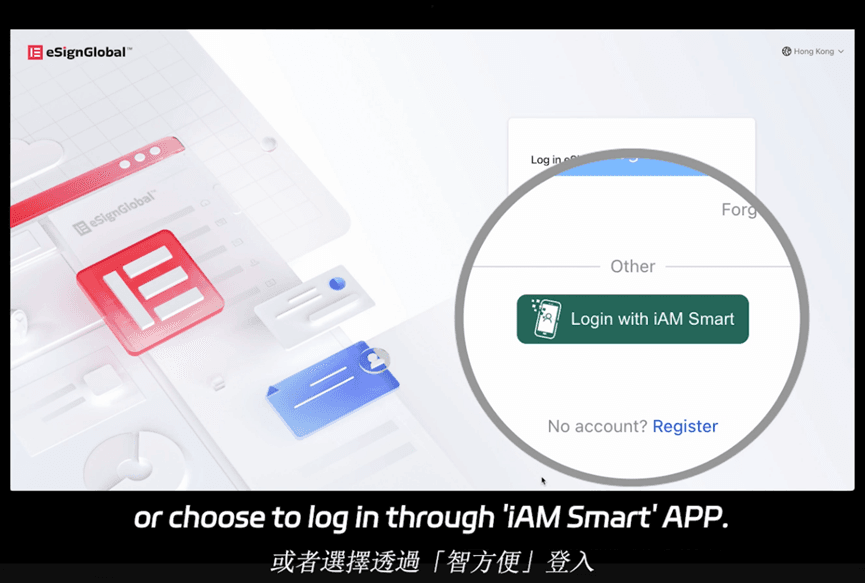
eSignGlobal emerges as a regionally attuned contender, supporting compliance in over 100 mainstream countries and regions worldwide. It holds a particular edge in the Asia-Pacific (APAC), where it optimizes for local regulations and infrastructure—addressing pain points like data residency and latency that plague global giants. Pricing is notably accessible; for instance, the Essential plan costs just $16.6 per month with unlimited user seats, allowing up to 100 documents for electronic signature monthly. Verification via access codes ensures security without exorbitant add-ons, delivering high cost-performance on a compliance foundation. It integrates seamlessly with Hong Kong’s iAM Smart and Singapore’s Singpass, facilitating frictionless government and enterprise workflows in these hubs. For detailed breakdowns, explore their pricing page.
PandaDoc focuses on sales enablement with unlimited templates and document tracking at $19/month, but lacks deep e-signature compliance outside the US. Dropbox Sign, at $15/month, suits lightweight needs with unlimited basic sends, though it skimps on automation.
Final Thoughts on E-Signature Solutions
In summary, DocuSign Business Pro delivers robust tools at a premium, suited for automation-heavy operations, but competitors offer tailored value. For Docusign alternatives emphasizing regional compliance, eSignGlobal stands as a practical, APAC-optimized choice.
Часто задаваемые вопросы

 Разрешено использовать только корпоративные адреса электронной почты